BLOG |
|
By Nicki Jecha 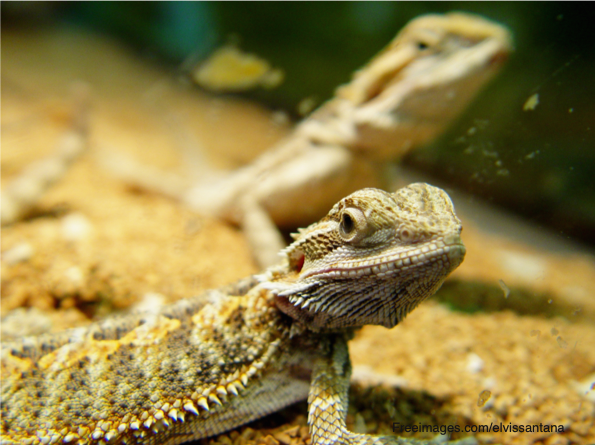 When I was a kid, I would beg my mom to go to the pet store so I could look at all of the nonhuman animals there. I would see all of the animals and think to myself, “wow they are so cute. I want all of them”. I still do that sometimes, but now when I do that, I think about the commitment it takes to have these animals. Most people do not take time to research the care that goes into keeping companion animals, specifically reptiles. This leads to a poor quality of life for the animals. The popularity of exotic animals is high enough that the exotic animal trade is still prevalent, and most reptiles are taken from the wild where they have a limited chance of surviving. This is why I think exotic reptiles should not be sold in pet stores.
Before talking about the logistics of why some exotic reptiles should not be sold as companion animals, let’s define what “exotic” means. According to Lianne McLeod, DVM, an exotic companion animal can be loosely defined as companion animal that is not a dog, cat, or farm animal. It is a companion animal you would not normally think of in a household. The key word in this definition is “loosely”. Defining a companion animal as exotic or not depends on the context you want to describe the animal in. Some people may not think of a bearded dragon when naming popular companion animals, so it would be considered exotic (the bearded dragon is the lizard in the picture above). Yet it is a common reptile to see in a pet store. I have more personal knowledge about exotic companion animals in pet stores because I work at a chain pet store. I spend a lot of time educating people on the care of reptiles because a lot of reptiles have more requirements than small animals (hamsters, guinea pigs, etc.). Reptiles all have different heat and humidity requirements we as caretakers have to adhere to, and a lot of people don’t know that. There are reptile enthusiasts that want to give those animals the best life, but that is not necessarily the target audience of a chain pet store. Lack of knowledge is a big component in the neglection of reptiles. The assumption is that you can walk into a pet store, buy a nonhuman animal you think looks cool, and then walk out with this animal and have he/she live a full life. This is not the case with reptiles. There are many common issues associated with reptile neglect including metabolic bone disease due poor diet, inappropriate temperatures and humidity, which can cause thermal stress, and inappropriate handling. By Reed Seifert  Let’s start with a quick narrative to set the scene- the story of Rudy and Louie. As a child I was desperate to bring a furry companion into my life, so at the tender age of 10 I lobbied my parents relentlessly to get a dog. I used all the plays in the play book and pulled every trick from my sleeve, and eventually they caved. I was thrilled to have gotten my way, however my mother and father agreed on one condition- the dog was to be kept in a kennel in the garage. Unfazed by this stipulation we bought our first dog, a Yellow Lab bred specifically for hunting and named him Rudy. My life was complete with the new addition to the family, or so I thought. When Rudy became too large to keep in the house my parents enacted their one condition, and bought a 9’ x 6’ kennel for the garage.
Five years later my younger sister began to press our parents for her own dog. She must have taken notes on my tactics, because she too was successful. Her breed of choice was a cute little white Cavachon with big black eyes and a round face. The fur ball named Louie quickly earned the nickname “Lou-cifer” for his constant carpet-pooping, carpet-peeing, and (worst of all) sock-eating tendencies. Despite all the mayhem and destruction Louie brought to our house, he received the keys to the castle. And so I thought, “Why was Rudy locked in a 50 Square foot kennel eating kibble, while Louie lived in our 2,000 Square foot house eating home cooked dog food?” This is the question prompted my research into how socially constructed roles for dogs have led to such a radical disparity in living conditions. |
ABOUT
This is a website about nonhuman animals, written by human animals taking a Society and Animals class at Minnesota State University, Mankato. Archives
November 2024
Categories
All
|
 RSS Feed
