BLOG |
|
By Nicki Jecha 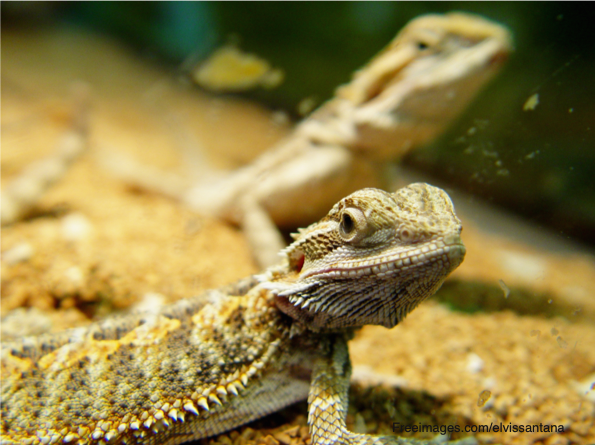 When I was a kid, I would beg my mom to go to the pet store so I could look at all of the nonhuman animals there. I would see all of the animals and think to myself, “wow they are so cute. I want all of them”. I still do that sometimes, but now when I do that, I think about the commitment it takes to have these animals. Most people do not take time to research the care that goes into keeping companion animals, specifically reptiles. This leads to a poor quality of life for the animals. The popularity of exotic animals is high enough that the exotic animal trade is still prevalent, and most reptiles are taken from the wild where they have a limited chance of surviving. This is why I think exotic reptiles should not be sold in pet stores. Before talking about the logistics of why some exotic reptiles should not be sold as companion animals, let’s define what “exotic” means. According to Lianne McLeod, DVM, an exotic companion animal can be loosely defined as companion animal that is not a dog, cat, or farm animal. It is a companion animal you would not normally think of in a household. The key word in this definition is “loosely”. Defining a companion animal as exotic or not depends on the context you want to describe the animal in. Some people may not think of a bearded dragon when naming popular companion animals, so it would be considered exotic (the bearded dragon is the lizard in the picture above). Yet it is a common reptile to see in a pet store. I have more personal knowledge about exotic companion animals in pet stores because I work at a chain pet store. I spend a lot of time educating people on the care of reptiles because a lot of reptiles have more requirements than small animals (hamsters, guinea pigs, etc.). Reptiles all have different heat and humidity requirements we as caretakers have to adhere to, and a lot of people don’t know that. There are reptile enthusiasts that want to give those animals the best life, but that is not necessarily the target audience of a chain pet store. Lack of knowledge is a big component in the neglection of reptiles. The assumption is that you can walk into a pet store, buy a nonhuman animal you think looks cool, and then walk out with this animal and have he/she live a full life. This is not the case with reptiles. There are many common issues associated with reptile neglect including metabolic bone disease due poor diet, inappropriate temperatures and humidity, which can cause thermal stress, and inappropriate handling.
Iguanas also need increased humidity and temperature because they live in tropical climates. Imagine having a lizard bigger than you living in your house and taking care of that. In fact, National Geographic statesthat, “most captive iguanas die within the first year, and many are either turned loose by their owners or given to animal rescue groups”. There is an easy fix for anyone wanting to have a reptile as a companion animal. Do your research before you go and buy one and do not buy the animal if you do not know where it came from. Another reason why chain pet stores should not sell exotic animals is because in some cases they are taken from the wild and cannot survive. So, a hypothetical situation: let’s say you come home from the chain pet store with this new iguana that you got. You did your research, spent time picking out everything you need, built the room sized habitat that your iguana will need and are ready to be a caretaker. Then something happens, your iguana doesn’t look too good. He/she stops eating and later dies. You know you did everything right. You even took him/her to the vet, but the vet may not have experience with iguanas. The harsh reality is that your iguana was taken from the wild. This whole scenario is more common than one may think. This is because of the exotic pet trade. Animals are taken from their native habitat and sold, most likely in another country, to caretakers or pet stores. This is not only harmful to the animals being sold but to the environment itself. The animals are being taken from their natural environment, which disrupts the ecosystem. To make matters worse those impulse buyers decide to release their iguana into the wild. Now the iguana is invading a habitat it is not native to, and that can also disrupt the ecosystem already in place. A study done by Oliver Stringham and Julie Lockwood discusses the conclusion that companion animals that are cheaper in price and more abundant are more likely to be released. Consumers buy a reptile initially because it is not expensive and is easy to find in a pet store. They realize that they do not want this reptile anymore and then decide to release it into a foreign habitat instead of taking it somewhere with people who can care for it. I am going to talk about another commonly neglected reptile, the chameleon. Like iguanas, chameleons are misunderstood when it comes to care requirements. In case you don’t know what a chameleon looks like there is a picture below. They need specific heat and humidity, like all reptiles, but they are more sensitive to vitamin deficienciesas well. They are prone to stress, so when their requirements are not met, it can be detrimental. They also can wrap their tongues inside their skulls and then project their tongues out to catch bugs (it’s super cool to watch). Here’s another hypothetical situation: you have this chameleon that you cannot take care of anymore. He/she is a lot of work and money for you. What do you do? The final point to make is instead of buying reptiles from a chain pet store, look into rescuing one instead. The chameleon you can’t take care of can be handed off to a rescue that will take care of it. In Stringham and Lockwood’s study they talk about their methods saying that, “We collected life history and economic data on the 1,722 species of reptiles and amphibians sold within the US as pets over the last 18 years”. That is a lot of species sold that can be found at a rescue. Also, the people working at the rescues will have more knowledge about the care of each reptile. By going to a shelter or rescue group, you are giving the reptiles there another chance at having the best life while in captivity.
So, if you are ever in the situation where you cannot take care of the companion animal you currently have, give it to a rescue or someone else you know who can. Releasing it into the wild is only doing more damage to the environment and the animal itself. But most importantly, before getting any new companion animal, think about the kind of commitment needed to take care of them. They deserve it. ReferencesExotic Pet Trade. (2019). Retrieved from https://www.nhes.org/exotic-pet-trade/ Grant RA, Montrose VT, Wills AP. ExNOTic: Should We Be Keeping Exotic Pets?. Animals (Basel). 2017;7(6):47. Published 2017 Jun 19. doi:10.3390/ani7060047 Green Iguana. (2018, September 24). Retrieved from https://www.nationalgeographic.com/animals/reptiles/g/green-iguana/ McLeod, L. (2019, October 2). How Do You Care for Pet Chameleons? Retrieved from https://www.thesprucepets.com/chameleons-t2-1236756 McLeod, L. (2019, September 4). What Is an Exotic Pet? Retrieved from https://www.thesprucepets.com/what-is-an-exotic-pet-1237289 Stringham, O., & Lockwood, J. (2018). Pet problems: Biological and economic factors that influence the release of alien reptiles and amphibians by pet owners. Journal of Applied Ecology, 55(6), 2632–2640. https://doi.org/10.1111/1365-2664.13237 Author BioNicki Jecha is a junior at Minnesota State University Mankato majoring in Biology with an emphasis in Zoology. She hopes to pursue a career in conservation in the future. In her free time, she loves to walk and be outdoors as well as spend time with her two dogs.
Comments are closed.
|
ABOUT
This is a website about nonhuman animals, written by human animals taking a Society and Animals class at Minnesota State University, Mankato. Archives
November 2024
Categories
All
|


 RSS Feed
